A slight squeal is heard when braking. The pedal does not feel as firm as before. This is considered a clear indication. Corolla Brake Pads are now replaceable. Brake pads are not usually paid attention to. It is only when the sound comes that the idea comes. At this stage, complex details are not needed. Just a straight and clear answer is needed. This guide is written for this purpose. It will tell you the symptoms of worn pads. It will explain how to choose the right pads. It will give an estimate of the general cost. The replacement procedure will be explained. Common mistakes will also be identified, which later prove to be expensive.
Why Brake Pads Matter More Than People Realize
Brake pads are the part of the braking system that slows down a vehicle by applying pressure to the rotor. Each time you brake, a thin layer of the pad wears away. After thousands of kilometers, this layer becomes so thin that there is nothing left to create friction.
The Corolla is a lightweight, front-wheel drive sedan. That’s why it experiences less braking pressure than SUVs or trucks. However, the wear of the Corolla brake pads depends on driving style. Frequent braking in urban traffic wears the pads out quickly. Maintaining a constant speed on the highway slows this process down. If you have a habit of keeping your foot on the brake in traffic, the wear will be felt even faster.
Signs Your Corolla Brake Pads Need Replacing
You don’t need a mechanic’s tool to know when it’s time to replace your Corolla Brake Pads. The car itself will give you clear signals in time; you just have to know how to recognize them.
A High-Pitched Squeal When Braking
Most Corolla brake pads have a small metal indicator. When the pad wears down to a certain thickness, this indicator rubs against the rotor. This friction produces a thin, metallic squeal, which is more pronounced at low speeds. This sound is intentionally designed. It’s basically the pads’ own way of telling you to replace them before things get worse.
A Grinding Sound Instead of a Squeal
If the squealing sound turns into a deep grinding or rumbling, it’s clear. The Corolla Brake Pads have completely worn out. Now metal is rubbing directly on metal. This issue is not something to be ignored, but requires immediate attention. The rotors are also starting to get damaged. A simple pad change now turns into an expensive rotor change.
Longer Stopping Distances
If your Corolla takes longer to stop than before, or the brakes feel “soft” and less effective, it’s often due to worn Corolla Brake Pads. As the friction material decreases, stopping power automatically decreases.
Vibration or Pulsing in the Brake Pedal
This symptom is considered a bit tricky. A pulsating squeal when braking is often a sign of warped rotors, not just Corolla Brake Pads. However, uneven pad wear can also play a role. If you experience a regular squeal when braking, it’s a good idea to have both the pads and rotors inspected at the same time.
Visual Wear
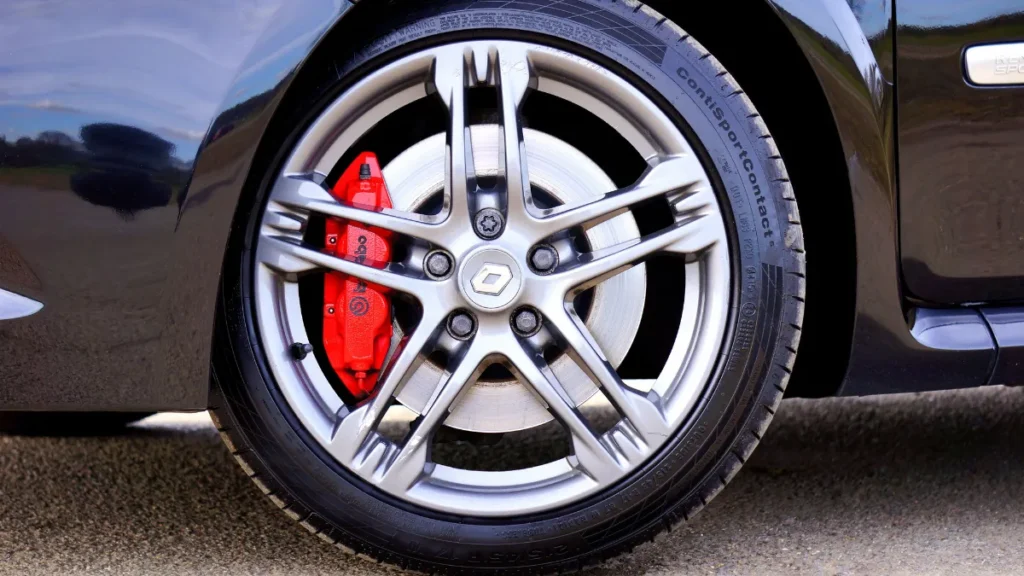
Corolla Brake Pads appear to be pressed against the rotor when viewed through the spokes of the wheel. As a general rule, if the pad material is less than 3 mm, then an early replacement should be planned. If this amount drops to 1 to 2 mm, then further delay is not considered appropriate.
Types of Brake Pads Available for the Corolla
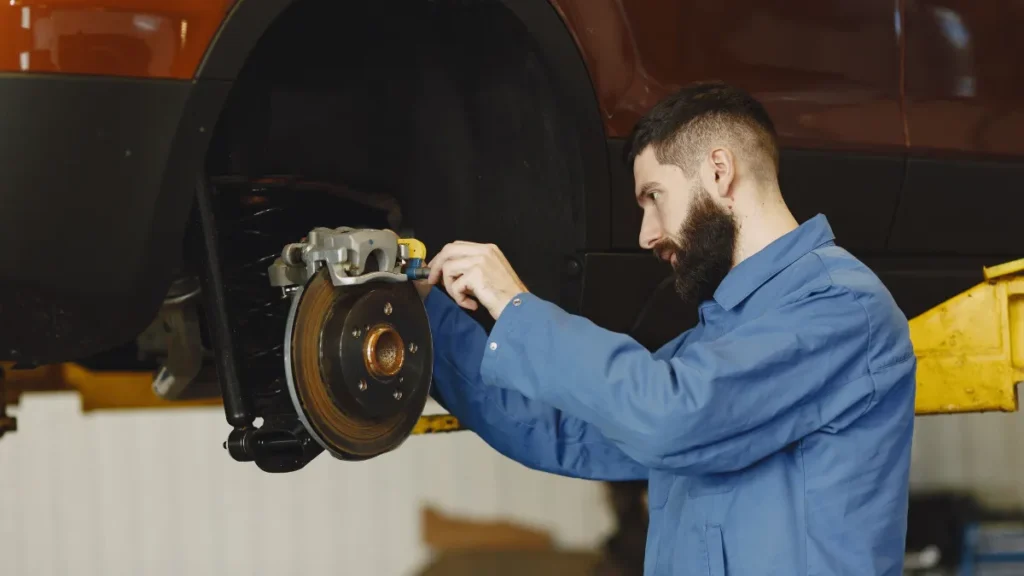
Not all Corolla Brake Pads are created equal. Choosing the right type makes a clear difference in the driving experience.
Ceramic Brake Pads
Ceramic pads are considered the most common choice of Corolla owners, especially for daily commuting. These Corolla Brake Pads produce very little dust. They are also very quiet. They also have a gentle effect on the rotors. They are not cheap, but their long service life and clean wheels make this investment worthwhile for most owners.
Semi-Metallic Brake Pads
Semi-metallic pads combine metal fibers with other materials. This combination provides strong braking power and good heat resistance. These Corolla Brake Pads are a bit noisier than ceramic. They also produce relatively more dust. Wear on the rotors can also be a bit faster. If driving is aggressive or hilly terrain is common, semi-metallic pads are considered a suitable choice. They are often considered overkill for a typical Corolla.
Organic (Non-Asbestos Organic / NAO) Brake Pads
Organic pads are made from a combination of fibers, rubber, and resin. They are considered soft and quiet, but wear out faster than ceramic or semi-metallic. These Corolla Brake Pads are cheaper in price. They also have a gentler effect on the rotors. They are considered suitable for short-term use, but not suitable for those who expect them to last long.
OEM (Genuine Toyota) Brake Pads
If you need factory-exact parts for your Corolla, genuine Toyota pads are the safest choice. Depending on the model year, OEM Front Corolla Brake Pad sets typically come in these part numbers: 04465-02070 (models 2003 to 2007), 04465-02220 (models 2009 to 2013), 04465-02410 (models 2014 to 2019), and 04465-02460 (models 2020 and later). These numbers also depend on whether the vehicle is made in Japan or North America. For this reason, it is considered important to verify the part with the vehicle’s VIN before placing an order.
How Long Do Corolla Brake Pads Actually Last?
There is no single answer to this, as it depends entirely on driving habits. In general, Corolla Brake Pads last between 30,000 and 70,000 km. Drivers who do a lot of highway driving will find this range closer to the upper end. Drivers who drive in urban traffic and brake frequently will need to change closer to the lower end. Rear brake pads generally last longer than the front pads, sometimes twice as long. This is because the front brakes handle most of the stopping power.
How Much Does Replacing Corolla Brake Pads Cost?
The price depends on whether the parts are OEM or aftermarket, and whether the installation is being done yourself or by a mechanic.
- If you are buying just Corolla Brake Pads and doing the installation yourself, you will pay a reasonable price for a standard aftermarket or ceramic set.
- Genuine OEM Toyota pads are usually a bit more expensive than aftermarket, but due to the consistency of fit and quality, most owners consider them a better investment.
- If the vehicle is taken to a workshop, the cost of the parts will also include labor charges. This cost can vary depending on the area and the condition of the rotors.
It is considered a good practice to have the rotors inspected along with the pads. If the rotors are worn or damaged, replacing the pads alone will not completely solve the noise or performance problem.
How Corolla Brake Pads Are Replaced (Step-by-Step Overview)
Corolla Brake Pads: It is not considered necessary to change the brake pads yourself. However, it is beneficial to understand the procedure. When taking it to the workshop, it is also clear what you are paying for.
Step 1: Lifting the Car and Removing the Wheel
The vehicle is safely lifted. The wheel is removed to expose the brake caliper and rotor assembly, allowing access to the Corolla Brake Pads.
Step 2: Removing the Caliper
The brake caliper, which presses the Corolla Brake Pads against the rotor, is carefully opened. It is set aside, while the brake line is left connected.
Step 3: Removing the Old Pads
Worn Corolla Brake Pads easily come off the caliper bracket. This is the stage when the mechanic checks the condition of the rotor. The anti-rattle clips and retaining pins are also inspected at this time.
Step 4: Compressing the Caliper Piston
The new Corolla Brake Pads are thicker than the old pads. That’s why the caliper piston has to be pushed back to make room. This is done carefully with the help of special tools, so as not to damage the piston or brake line.
Step 5: Installing the New Pads
New Corolla Brake Pads are fitted to the caliper bracket. New anti-squeak shims are also fitted if required. Toyota usually recommends replacing the shims with the pad change, as old shims can make the pedal soft and weak over time.
Step 6: Reassembling and Testing
The caliper is put back in place. The wheel is fitted back, and the vehicle is lowered. The brakes are applied a few times before normal driving, so that the Corolla Brake Pads are seated properly against the rotor. The vehicle is then tested at low speeds.
Common Mistakes Corolla Owners Make With Brake Pads
Some small mistakes are repeated over and over again, and these prove costly in the long run in the case of Corolla Brake Pads.
Waiting Too Long to Replace Worn Pads
Ignoring the initial squealing sound often leads to rotor damage. Cheap Corolla Brake Pads replacement thus turns into expensive pad and rotor work combined.
Mixing Pad Types Between Axles
Using Corolla Brake Pads with different compounds on the front and rear brakes can cause uneven braking. It is best to stick with the same type, unless your mechanic advises otherwise.
Skipping the Anti-Squeal Shims
Reusing old, worn shims can be a costly trade-off for a small saving. This can cause the pedal to feel soft or unstable. With Corolla Brake Pads, this problem forces brake bleeding, an extra step that could have easily been avoided.
Not Checking the Rotors
Installing new Corolla Brake Pads on damaged or scratched rotors will not provide the smooth braking you expect. Rotors and pads work as a system, not as separate parts.
Tips to Make Your Corolla Brake Pads Last Longer
- Maintain a safe distance and anticipate slowing traffic to avoid unnecessary hard braking.
- Avoid keeping your foot on the brake pedal continuously in slow traffic. Light and controlled pressure will help protect Corolla Brake Pads for longer.
- Keep an eye on the brake fluid level. Old fluid can clog the caliper, causing one pad to wear faster than the other.
- Be sure to have your brakes inspected during every oil change, so that wear can be caught before it becomes a squeal.
Conclusion
Corolla Brake Pads are a small part, but a big responsibility. Paying attention to early signs saves both time and money. Ceramic pads for a quiet ride, semi-metallic for strong braking, or genuine OEM pads for factory quality, whatever the choice, the key is not to wait for the noise to start. A basic pad change is one of the cheapest and easiest maintenance tasks for your Corolla, provided it is completed on time.
FAQs
How do I know if my Corolla needs front or rear brake pads?
The easiest way is to listen. If the squeal or gurgle is more pronounced when braking at medium speeds, then the front Corolla Brake Pads are usually responsible, as they handle most of the braking load. The mechanic can confirm this in a few minutes by looking at the pad thickness on all four wheels.
Can I replace Corolla brake pads myself, or should I go to a mechanic?
Corolla Brake Pads: It is possible to replace the brake pads yourself if you have experience with basic tools. This job is considered to be of medium difficulty. However, if you are not confident in checking the caliper pistons or rotors, it is best to have a mechanic do it. Brakes are not tested.
Do I need to replace the rotors every time I replace the brake pads?
Rotors usually last two or three Corolla brake pad changes, if the vehicle has not been driven on worn pads for a long time. The mechanic will tell you whether the rotors will last longer by looking at the thickness and scratches.

Zarmeen Rafiq is an automotive writer at MotoGPVibes who covers car reviews, buying guides, vehicle comparisons, and automotive news. She creates clear, well-researched content to help readers make confident and informed decisions.