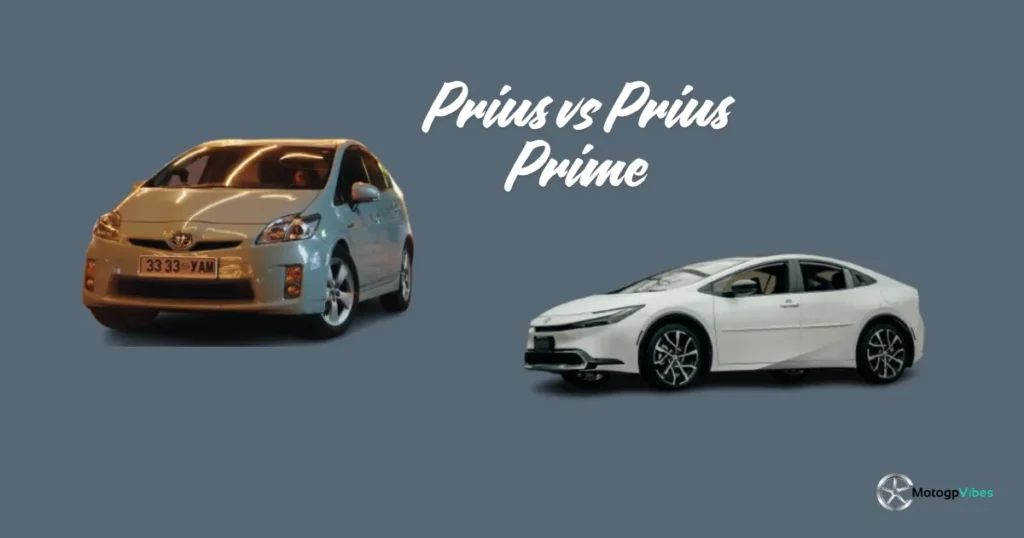
The Toyota logo is the same, but in the Prius vs Prius Prime comparison, the journeys of these two vehicles are completely different. Some buyers pay the extra cost of a plug-in battery that they never fully use, while others ignore it and miss out on huge fuel savings. In this guide, we will present the technology, financial burden, and everyday driving experience of both vehicles to you without any marketing veil. After reading to the end, you will be able to decide for yourself which vehicle is better suited to your needs and daily use.
How the Prius vs Prius Prime Work Under the Hood
Both the Prius vs Prius Prime operate on the same basic principle: combining a petrol engine with an electric motor to deliver greater mileage at a lower cost. The difference begins where the battery’s role changes. A typical Prius has a small battery pack that only supports the engine, and it charges automatically while braking or coasting. The Prius Prime, on the other hand, has a massive lithium-ion pack installed, capable of running the vehicle entirely on electricity, not just an auxiliary, but a separate power source in itself.
Prius vs Prius Prime: The Role of the Electric Motor in Each Model
In a typical Prius, the electric motor acts as an assistant, smoothing acceleration and reducing fuel consumption at low speeds, but the engine runs almost all the time. In contrast, the motor in the Prius Prime can autonomously drive the vehicle for short distances without the engine’s assistance, giving it an almost fully electric vehicle-like experience on the daily commute.
Real-World Driving Experience: Prius vs Prius Prime
On the road, the two vehicles feel almost identical; there’s no noticeable difference in steering response, ride smoothness, or cabin quietness. The real difference comes over short distances. When the Prius Prime’s battery is fully charged, the car starts up quietly and cruises around town without burning gas. On the other hand, the regular Prius’ engine automatically turns on and off repeatedly; a driver might hardly notice it, but some might find the process a bit jarring.
City Driving vs Highway Driving

Busy city traffic actually benefits the Prius Prime, as this stop-and-go process allows the electric motor to take on more responsibility. But as soon as the car hits the motorway, the battery’s range begins to shrink rapidly, as constant acceleration quickly depletes energy, and at this stage both models become virtually reliant on the petrol engine.
Ownership Costs Over Five Years
The initial price of a car only tells half the story. The real financial reality is hidden in the monthly costs of insurance, gas, and charging. Because the Prius Prime has a high purchase price and its battery can be expensive to repair, its insurance premiums often go up as well. But here’s the flip side: If the car is charged regularly, the Prime can save hundreds of dollars over the regular Prius on an annual basis.
| Category | Prius | Prius Prime |
|---|---|---|
| Base Price | Lower | Higher |
| Insurance Estimate | Standard | Slightly higher |
| Yearly Fuel Cost | Moderate | Low, if charged often |
| Battery Type | Small self-charging | Large plug-in |
| Electric Range | None | 40–45 miles |
| Tax Credit | Rarely available | Frequently available |
| Charging Time | Not applicable | A few hours at home, faster on public chargers |
| Cargo Room | Slightly larger | Slightly smaller |
Charging Infrastructure: What Prime Owners Actually Need
The real advantage of the Prius Prime comes when there is a charging facility at home. A normal wall socket charges the battery overnight without interruption, while a dedicated home charger speeds up the process. But for those who live in an apartment without personal parking, it can be difficult to make daily charging possible, and that’s where Prime’s biggest advantage shines. In fact, this is the one factor that determines whether the additional cost will be truly beneficial or simply a wasted expense.
Public Charging as a Backup Option
Public charging stations are only an emergency stopgap, not a permanent everyday solution. Owners who rely on them frequently have to waste extra time and sometimes have to wait in line, annoyances that those with at-home charging facilities never experience.
Pros and Cons of the Standard Prius
Pros:
- Significantly lower starting price than Prime
- No hassle of installing any charging equipment or daily planning
- Slightly more interior cargo space, which makes it easier to store gear
- No worries about long-term battery health issues
Cons:
- The convenience of driving in pure electric mode is completely absent
- Does not benefit from most of the incentives offered to plug-in vehicles
- The fuel economy graph gradually flattens out on long journeys
Pros and Cons of the Prius Prime
Pros:
- True all-electric drive capability for short distances
- Access to a variety of state and federal incentive programs
- Significant reduction in fuel costs on short daily commutes
- A unique, smooth, and quiet driving experience at low speeds
Cons:
- Relatively high initial investment required at the time of purchase
- For best results, charging should be regular and easy access
- Trunk capacity is somewhat limited compared to the regular Prius
- If daily charging is not part of the routine, the true value of this vehicle is lost
Environmental Impact: Which One Runs Cleaner?
Emissions depend not only on the fuel source of the vehicle, but also on how the vehicle is driven in everyday use. If the Prius Prime is charged with clean energy sources, it produces far fewer emissions over short distances than a typical gasoline vehicle. On the other hand, the standard Prius, while more environmentally friendly than a conventional gas vehicle, still burns some fuel for every mile, whether the trip is short or long, and whether or not there is a charging facility nearby.
Which Car Actually Matches Your Lifestyle?
Those with access to home charging and short daily commutes can actually benefit the most from the Prius Prime, both in terms of financial savings and environmental impact. But for those who drive long distances, use a rental car without charging access, or simply want the most convenient ownership experience, the standard Prius is a simpler, more hassle-free choice. The truth is, no one car is better overall; each is better for its specific driving needs.
Conclusion
If you want proven reliability, a low initial cost, and complete freedom from any charging hassles, the standard Prius is the obvious choice. But if your daily commute is short and charging can be easily incorporated into your routine, the Prius Prime will be more beneficial, as it often makes the journey almost completely petrol-free. In the end, the Prius vs Prius Prime decision isn’t about which car is more modern or flashier, but which one better suits your everyday driving style.
FAQs
Which one holds its value better after a few years, the Prius or the Prius Prime?
Both vehicles hold strong positions in terms of resale, but in areas where EV demand and rebate programs are active, the Prius Prime generally fetches better value. While in regions with less interest in plug-in vehicles, the standard Prius sells out at the same pace.
Does the Prius Prime need premium fuel?
No, both the Prius vs Prius Prime run fine on regular unleaded gasoline; neither needs premium fuel. That’s why it’s easy to estimate fuel costs, no matter which model you choose.
Can you install a home charger yourself for the Prius Prime, or is professional installation required?
A standard wall socket is sufficient for basic overnight charging without any special installation. However, if you want fast charging, installing a dedicated home charger usually requires the services of a licensed electrician.
Is the Prius Prime a good option for someone who doesn’t own a garage or driveway?
Without private parking, this option can be difficult, as it becomes difficult to establish a daily charging routine. That’s why renters or those without dedicated parking spaces often find the standard Prius a more practical and beneficial choice.
Related Articles:

Zarmeen Rafiq is an automotive writer at MotoGPVibes who covers car reviews, buying guides, vehicle comparisons, and automotive news. She creates clear, well-researched content to help readers make confident and informed decisions.