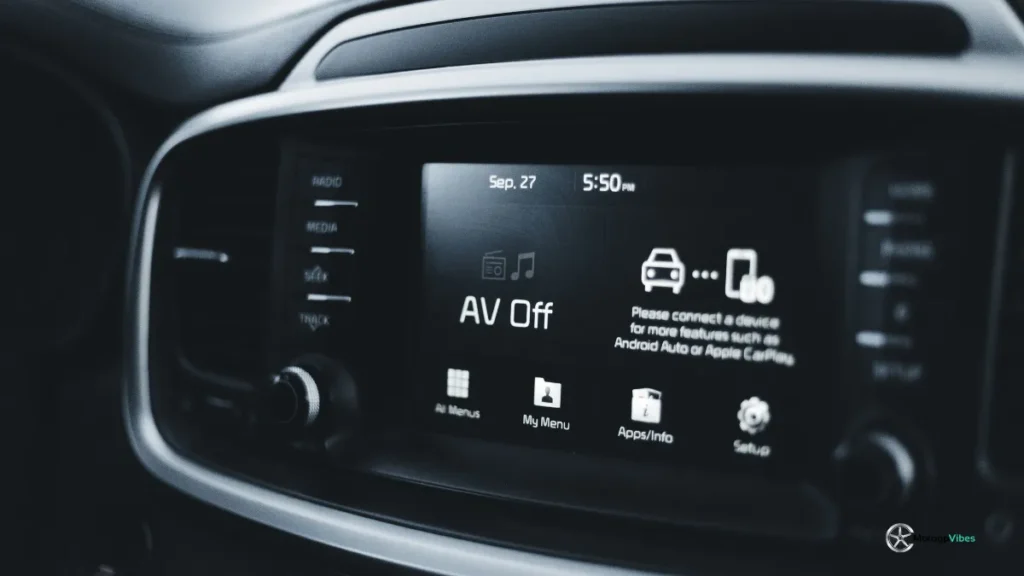
The meaning of “Connected Car” has completely changed. It used to be just Bluetooth and a simple GPS screen – that’s it. Now, when people say the word, it means something completely different.
The cars of 2026 will be doing things that only appeared in movies a few years ago. The car will warn you before a breakdown occurs, change lanes before traffic jams, and the software will update itself overnight – just like a phone.
This is not a promise of the future; it is on the roads today. And the automakers that are slow to understand this are learning the hard way.
Cars Are Turning Into Software, Not Just Machines
The most obvious change in the auto industry right now is the software-defined vehicle, or SDV. It’s simple, man – a car is no longer complete on the day you buy it. It keeps changing after that, via remote updates, i.e., OTA (over-the-air), just like a new iOS version comes to a mobile phone.
Think about it: a car bought in January can feel completely different by December – and that’s without even going to the mechanic once.
Now the question of “is it just an extra feature?” – the truth is that this question no longer makes much sense. Because for companies, it’s no longer just a feature; it’s an entire business model. When a car can be remotely updated, the way it’s sold also changes – subscriptions, locked features that can be unlocked later, and ongoing digital services. That is, the story doesn’t end with a one-time payment.
And now there’s a new term circulating in the industry – AI-defined vehicle. It’s not quite mainstream yet, but the direction is clear. AI is no longer limited to the infotainment screen; it’s moving closer to the core functionality of a car – catching maintenance issues early, automatically changing cabin settings based on driver recognition, and more.
Automakers are learning the hard way that a car is no longer just a mechanical machine. It’s a digital product that evolves – just like the smartphone in your pocket.
Better Connectivity, Not Just Faster Connectivity
The old debate was simple – is the car on 4G or 5G? But to be honest, that question doesn’t really matter anymore. The real change is something else – now cars automatically switch between cellular, satellite, and local (edge) processing, depending on what’s available at the time.
Think of driving through a mountain pass or tunnel where the signal would have been completely gone before – now the car doesn’t sit still there either.
Satellite connectivity is a prime example of this development. Not long ago, it was considered an expensive and experimental idea. But now it’s being used for real emergency communications – meaning even in places where there’s no cellular signal at all, the car can still access help.
Vehicle-to-Everything, or V2X, is also rapidly expanding. Cars are now exchanging information directly with traffic lights, road sensors, and even the phones of nearby pedestrians. It sounds futuristic, but the goal is simple – to detect a threat a moment before a human driver.
Automakers are learning that connectivity is no longer just a matter of internet speed. It’s a matter of safety and reliability, where the car somehow finds a way to stay “connected” in all situations.
What Drivers Actually Care About – And What They Don’t
Not every connected feature is welcome, and that’s something to understand before we assume that more technology means a better car.
Safety features are the ones people are actually willing to pay for – automatic crash alerts, emergency assistance, anti-theft tracking. These are the things that people immediately understand their utility for.
But features that rely on continuous data collection are a different story. In-cabin cameras and constant location tracking – these make many drivers nervous, even if the stated purpose is safety.
Automakers are learning this the hard way. When a car is loaded with too many paid features and their utility is unclear, drivers simply stop renewing. The industry has now given this phenomenon a name – subscription fatigue.
The Real Money Is in Fleets, Not Just Personal Cars
Consumer tech keeps the headlines, but the real money is coming in commercial fleets. Delivery and logistics companies use live data to optimize routes, save fuel, and catch maintenance issues early – before the car breaks down on the highway.
Insurance companies are doing the same – now the price of a policy is based on real driving data, not estimates. It’s not about “cool technology” here; it’s about money and efficiency.
Conclusion
Connected car technology has now moved beyond proving that it works. That much is clear. The real work now is to separate the features that people actually want and trust from those that only look good in press releases.
The automakers that understand this distinction first will create loyal customers—not frustrated people who cancel their subscriptions after six months. The benefits for drivers are clear—fewer unexpected breakdowns, safer roads, and a vehicle that doesn’t just get old, but gets better over time.
For businesses, especially fleet operators, the benefits are already being seen—lower costs, fewer disruptions. Technology isn’t going to stop, and neither is the competition to do it right.
FAQs
What does “connected car” actually mean?
A connected car is a vehicle that can send and receive data in real time – via the internet, satellites, or other vehicles and infrastructure. That’s why remote diagnostics are possible, live navigation is possible, over-the-air updates are available, and emergency assistance is available immediately.
What is a software-defined vehicle (SDV)?
An SDV is essentially a vehicle whose features, performance, and to some extent even the behavior of the hardware are controlled by software – not fixed forever at the factory. This is why automakers can add new features or improve old ones even after a vehicle has been sold.
Is connected car technology safe from a privacy standpoint?
It depends on the feature. Safety tools like crash detection generally get a good response. But constant location tracking or cabin cameras — these raise legitimate privacy concerns. That’s why most automakers now allow you to manage these settings yourself.
Do I need a 5G car to get good connectivity?
Not necessarily. Most new vehicles now use a combination of cellular, satellite, and edge computing – and automatically switch between them. That means connectivity is maintained even where cellular signals are weak or nonexistent.
Are connected car features worth paying for?
Features that provide safety and everyday convenience, with a clear benefit, are truly worth it for most drivers. But features that simply collect data and have no clear benefit are the ones that people cancel as soon as the novelty wears off.

Zarmeen Rafiq is an automotive writer at MotoGPVibes who covers car reviews, buying guides, vehicle comparisons, and automotive news. She creates clear, well-researched content to help readers make confident and informed decisions.